Author Archives: John

From the Life of Kali Nassim: The Swallowtail Festival

Rova 21, 4707

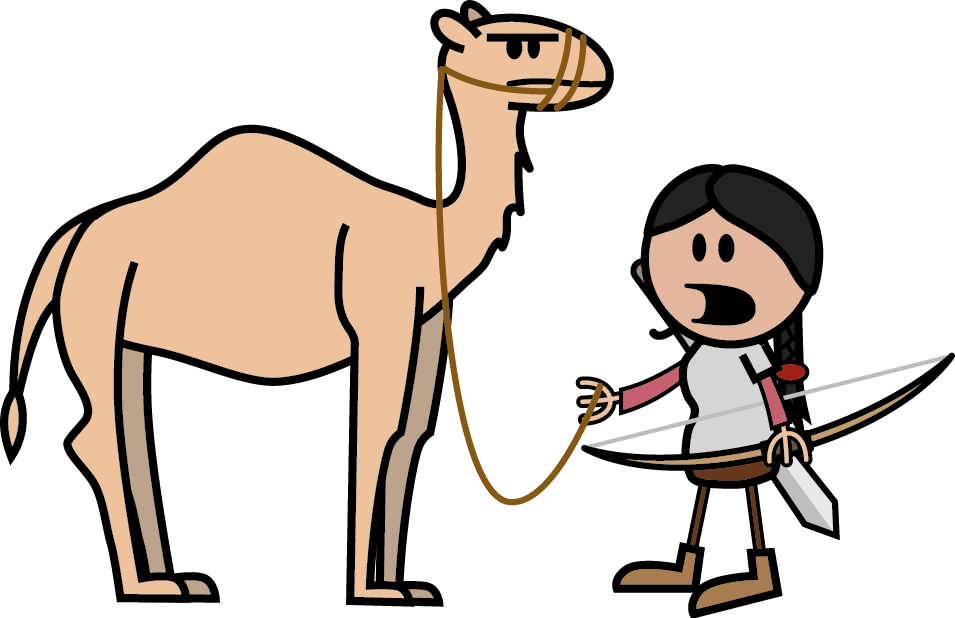
The first scream came just as Father Zantus started to speak. Kali, Ameiko and most of the crowd around them turned to see where it had come from when the second scream pierced the air. Ameiko focused on something in the distance, said “Goblin!” and then took off at a full run, darting and weaving through the crowd as a wave of panic rippled across the square from the southwest. Kali called out after her, but Ameiko neither turned nor slowed. Then, a chorus of shouts, yells and howls erupted from everywhere and true panic set in, several people running in any direction that took them away from the festival grounds. Kali lost sight of Ameiko in the chaos.

As the crowd scattered, Kali watched a small, dark shape slip behind a wagon parked next to Savah’s Armory. A small animal of some sort lay in front of it in the street, motionless in an expanding pool of blood. Strange, high-pitched voices—nonhuman voices—joined the cacaphony.

“Dad…?”

“We need to leave. We need to leave now!”

Akmal and Denea started to run but stopped mid-stride just as abruptly and Kali collided with her father, almost knocking them both down. Briefly irritated, she quickly saw what was wrong: a group of six goblins had appeared in the square, one jumping up on to the tables and scrounging for food while the others shrieked at disoriented stragglers.

“Go around, not through!” she heard her mother call out.

Denea grabbed Akmal’s arm and steadied him, then looked directly at Kali. Their eyes met, and Kali nodded. Let’s go! she thought.

As they dashed along the southern edge of the square, dodging scattering townspeople all the way, Kali caught sight of several heavily armed individuals confronting the goblins who were now advancing on the thinning crowd. She thought she saw Sedjwick and Kyras among them, but she did not recognize any of the others (and you could hardly forget, say, a half-orc carrying the largest battle axe she had ever seen). When they reached the southwest corner of the square, Akmal (now in the lead) almost ran straight along the narrow alley between buildings to Shell Street, but at the last second he saw something he didn’t like and yelled out “Right! Right!” and rounded the corner. Denea and Kali followed close behind. The battle in the square sounded fierce and brutal.

Now headed towards Church Street, the Kesk’s jewelry shop straight ahead, Kali glanced over and saw two goblins fall, slain by a pair of sword fighters. A large man and an equally large woman had nearly cut them in half. A priest was tending to a teenage boy who lay dying on the ground behind them.

Where is the town guard? she thought to herself.

Akmal called out “Stop!” just before they hit Church Street. The three of them came to a halt, hearts pounding and breathing heavily.

“What is it?” Denea asked him. Kali recognized the stressed tone in her voice.

“Something large, just past the Cathedral. I do not know what it is, but I see two animal eyes reflecting in the dark.”

Kali saw a glint of steel and noticed that her mother was wielding her dagger, and remembered seeing her draw it while they were running. I didn’t even know she was carrying that. Where does she hide it? She’d only seen her mom produce it like this a dozen or so times and it always gave her chills.

“Are you armed?” Denea asked her husband.

“No,” he replied.

“Idiot.”

“It was a festival.”

A huge ball of fire rose into the air on the far corner of the square. All three turned in unison and saw a wagon engulfed in flames.

“The fuel oil,” Akmal observed.

“More are coming. Can we make it to the house?”

Kali watched as several more goblins descended on the square. The group of would-be defenders—she counted seven of them now—met them head on. There was still no sign of the town guard. A furious skirmish erupted.

“That thing is still there. It is watching us.” Akmal replied.

“We’re probably safer near them.”

The fight in front of the Cathedral was over almost as fast as it had started. In less than half a minute the square was littered with the bodies of slain goblins. One of their wounded—Kali couldn’t see who—was sitting on the steps. Father Zantus had arrived and was reviving the critically injured teenager. The group held an agitated discussion that Kali could not hear, but she was pretty sure what they had decided: to the south, plumes of smoke were rising from the city center and there were sounds of distant fighting. They started moving that way when yet another scream rang out, this time from the northeast, near the city’s north gate. It was followed by the furious barking of a large dog.

“That thing is moving. It is headed towards the White Deer…” Akmal said. Unspoken—he didn’t have to say it because they were all thinking it—was, Next to our house.

The impromptu militia stopped, turned, and bolted up Church Street, running towards the source of the commotion.

“Go!” Akmal shouted.

Kali saw it happen and cried out “Wait!” but it was too late: a goblin sprinted out from behind a water barrel along Junkers Way heading in the same direction as the others, just as Akmal and Denea stepped into the street from alongside the building. Neither saw the other and the goblin collided with Akmal’s legs at a full run, sweeping them out from underneath him. Akmal went down hard onto his side, landing inches from the goblin that had been flattened onto its back, the wind knocked out of it.

Denea reacted first, bringing her dagger down with a sickening thud into the prone goblin’s chest. It shuddered and was still.

Kali watched this all unfold. Something in the back of her head told her she should have been frightened, but she wasn’t. It also occurred to her that, all around her, people had been panicking but she hadn’t done that either.

“Are you OK? Are you hurt?” Denea asked her husband.

“I may have broken a rib when I fell.”

He got up slowly. Denea handed him the large knife that the goblin had been carrying and he took it without question or comment. Up the street, the dog had stopped barking and they could hear another skirmish. From the sound of it, this one was much more fierce than the others.

“Through to Cliff Street?” Akmal asked.

Denea nodded and they moved, crossing the road more carefully this time, then slipping between the jeweler and the neighboring house. When they emerged on the other side they saw one of the town guard laying face down in the street on their left, almost certainly dead. His sword was not drawn and his hand had been clutching his crossbow when he fell. It looked like he had been stabbed from behind while readying his shot.

They went over to him and Akmal bent down to confirm what they already knew.

He added, “It is Garridan.”

Kali was staring at the crossbow on the ground. She looked up at her dad, to the sounds of the fight up the street near their home, and then at the glow from the fires burning in the city to the south.

And then she picked it up.

“Kali.”

She turned to face her father. He was holding something out in his hand.

“The quiver.”

§


From the Life of Kali Nassim: Nualia

Spring, 4701

Kali hurried down Main Street toward the cliffs, taking care not to collide with anyone along the way, as she didn’t want to miss seeing the sunset over the water. She rounded the town hall, with the enormous glassworks visible a couple of buildings down, and trotted out toward the edge.

The sun was just above the horizon, still bright but turning a fiery orange as it sank slowly to the water. She sat down on a comfortable grassy spot just a few feet from the edge that had become her favorite viewpoint, so caught up in her routine that she did not realize at first that she was not alone.

She recognized Nualia, of course. Kali had known who Nualia was within days of moving to Sandpoint. Everyone knew Nualia. Kali had seen all sorts of people in her family’s travels, but Nualia still stood out: silver hair, purple eyes, and something about her that didn’t quite look human. 

What did mom say she was? Aas-something?

“It’s not polite to stare.”

Kali turned her head away quickly, feeling embarrassed. She could tell her cheeks were flushing as she said, meekly, “I’m sorry.”

Nualia was laying on her side in the grass just off to her right, one hand resting on her abdomen. Quite a few people in Sandpoint came out this way to watch the sunset every now and then, but this was the first time Kali had run into her here. For some reason it made her uncomfortable.

Nualia turned to face her.

“You’re Kali.”

It wasn’t a question, but Kali answered as if it was.

“Yes, miss.”

For just a fleeting moment Nualia looked annoyed and Kali was embarrassed again.

Dummy! Just talk to her like she’s normal.

People did weird things around Nualia. Not so much the ones living in Sandpoint, but those in the farmlands out to the east. They would ask to stroke her hair, or to have a lock of it, and to touch her face or hand. Some even asked her to kiss their children. Once while she was out with her parents Kali saw someone kneel at Nualia’s feet in supplication, and beg or pray for something. She wasn’t sure what because she couldn’t hear the words, but her mom was very annoyed and remarked harshly about the farmers being superstitious. Her dad was more reserved, but she could tell he found it terribly rude and he was shaking his head as they walked away.

“Other kids pick on you.”

Also not a question. This time Kali didn’t say anything. Yes, some of them did; she was getting used to it and was learning who to avoid and who to ignore. That didn’t mean that she wanted it pointed out to her. Uncomfortable under Nualia’s gaze, Kali looked down and stared at a patch of dirt.

Nualia turned away, looking out over the gulf where the sun was dipping into the water, slowly turning from orange to a deep red.

After a couple of minutes she said, matter-of-factly, “It gets worse.”

The sun set in awkward silence.

§

From the Life of Kali Nassim: In Jalmeray

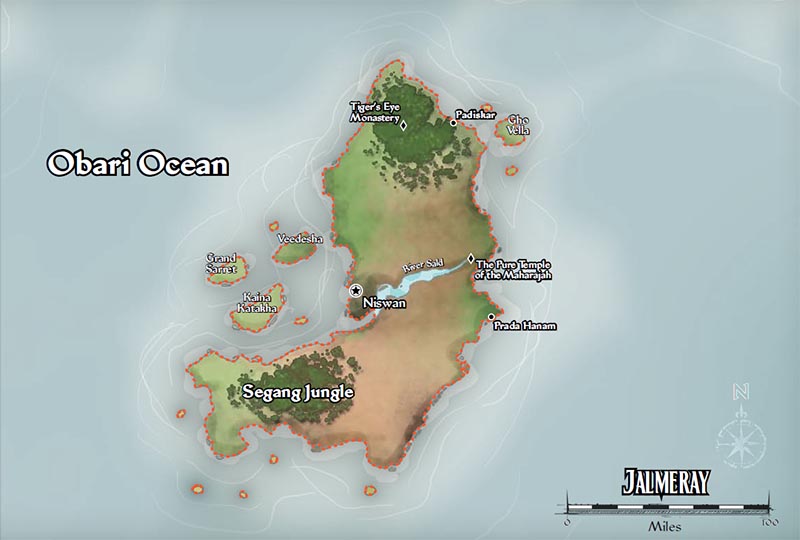
jalmerayWhen her parents announced that they would travel to Niswan just a few weeks ahead of her 11th birthday, Kali could hardly contain her excitement. It had been over five years since she had last seen her grandparents or the city where her father was born, and she could recall very little of her time in Jalmarey with any clarity. Some of that was simply the nature of a young child’s memory, but in the years since then the Nassim family had also been to the foreign ports of Kalsgard, Azir and Merab, numerous smaller settlements in Cheliax, and even briefly—very briefly—to the docks of Promise in Hermea (speculating about why Mengakare wanted those items would be a family pastime for many years). After the move to Sandpoint and the settling in at her new and now permanent home, those memories of what she saw as a young girl of six in Niswan were competing with others more recent and far more vivid.

She read a great deal about her father’s homeland in preparation for the journey and the more she read the more obsessed she seemed to become. At first, Akmal was concerned that the Kingdom would not live up to her expectations, but Denea quickly pointed out how unlikely that was: Niswan was a city that was formed, and still shaped by, the elementals and genies weaving magic in service to the Vudrani rajahs. Jalmeray was the west-most Impossible Kingdom and in this case it’s name was no exaggeration: the Kingdom itself would not and could not exist if not for the outsiders that were instrumental in its creation. One evening, Kali had asked if it was true that there were palaces “where the fountains flowed with wine instead of water”. Her father replied, nodding, “I have seen it”. How was it possible to be disappointed with such a place, when the reality was so much more fantastic than any story could convey?

And Denea was proved right in the end, as she often was when it came to her daughter. The almost eleven-year-old Kali was in awe of Niswan’s wonders. She walked on streets of red stone, between ornate pagodas several tiers high, silken streamers on their roof tops flowing in the wind. And the marble was everywhere: buildings, statues, fountains…some of them a pure white that gleamed int he sunlight. Niswan was a delight for the eyes, and there were many delights for the other senses as well. Now that she was old enough to appreciate it all she found the city to be nothing short of majestic.

Young as she was, though, she was also very keen and it did not take more than a few days for her to suspect that, aside from the culture, something about Niswan was very different from the other cities she had seen. It nagged at her. There were some obvious contrasts. The streets of Niswan were not just clean, but immaculate. The city itself was busy and bustling, yet also quiet and distinguished. It even seemed to have an effect on her mother: normally outspoken and rarely hesitant to offer her opinion on matters, Denea was reserved and deferential here (some might even call her behavior “polite”, though perhaps not within earshot). Yes, those things were obvious, but there was something else. Something much more subtle.

It was a couple of days before it came to her. Every city had its social and economic divides and Kali was under no illusions as to where she and her family fell on these scales. While the developed world might consider Sandpoint to be little more than a backwater settlement, her family’s life there belied its means. Children her age, or of any age for that matter, did not as a general rule travel the world, much less with her frequency. Most people did not leave their own country except to flee for their lives or as (unwilling) property of another. She knew, even at this age, the privilege under which she lived and a large part of that understanding came, surprisingly, from her mother. Denea not only didn’t shelter Kali from the harsh realities of poverty, at times she deliberately exposed her daughter to it. “Your father’s influence,” she would tell Kali many years later. “I wanted to raise you better than I was.”

What Kali saw in Niswan was a city like any other, except…there were no impoverished. There were poor, for sure, but she had yet to see what had been a common sight in every city of any size: the desperately poor, with no money and no prospects, surviving only at the generosity of others. There were no beggars, no homeless, no squatters and no squalor. When she broached the subject with her mother that evening, just as she was going to bed, Denea kissed her forehead and said, “You are an observant and clever young lady. And it is too late to talk about this tonight.”

Her father woke her very early the next morning, before dawn. “There is something I need to show you,” he said.

Two white horses were tied at the post in front of her grandparents’ home with reigns and saddles for riding, and Akmal helped her up onto the smaller one before untying them and mounting his. Once he was satisfied that Kali was ready, he said only, “Follow me,” and trotted off.

Akmal led her through the city as day broke. Whatever questions she had he was not ready to answer, and she eventually gave up on asking them and rode behind her father in silence. After nearly three quarters of an hour they had left the city proper, traveling along a small road on a grassy hillside overlooking the water. Down below, a rough path emerged from the brush and trees just above the shore, which it followed to austere wooden docks.

Akmal stopped, dismounted, and motioned for Kali to do the same. She eyed two  baqaara, ornately decorated as she had come to expect from Niswan (and in stark contrast to the docks where they were moored), sitting in the perfectly still water. Two men—a boat captain and a dockhand, Kali presumed—were preparing one of them for launch.

“Now, we sit and wait.”

In time, four hooded, cloaked figures emerged from the trees below, following the path to the docks. They approached the readied boat, greeted its captain, shed their cloaks and stepped aboard.

Kali gasped audibly.

“What happened to them?”

“This Kingdom was born from elemental magic 4,000 years ago, shaped by the will of the Maharajah Khiben-Sald. The magic of the genies still serves the rajahs today, alongside that of powerful sorcerors. This magic is responsible for the wonders around us, including the unnatural order you have seen in Niswan where even the lowest caste is provided for. But all these things…they come at a cost.”

The four figures took their seats, two choosing oar positions along with the captain.

Akmal continued, “All of this magic from hundreds of spells flows around us like the wind, and like the wind it is harmless…except on rare occasions when it is not, and causes these afflictions. This is the toll levied on a city created by, sustained by, and bathed in powerful magic from both our world and beyond.”

Kali watched in silence as the dockhand untied the baqaara’s mooring lines.

“If you are wealthy, or well connected, or simply have a large family of even modest means, you can pay to be cured. If you have none of these things…” He paused before continuing. “A lucky few are not severely stricken and may even recover in time. Most, however, are like this. They eventually become burdens on their families. When they have nowhere left to turn, they turn to the island of Gho Vella.”

The baqaara shoved off and its captain steered it away from the shore as the oars were lowered into the water.

“These men who ferry them. They do not ask for payment. No one knows why they choose to do this; if you ask them they will not say. We call them ‘The Curse Shepherds’.”

The boat picked up speed now, the captain and oarsmen rowing unsteadily at first but eventually smoothly and in concert. It was several minutes before Kali spoke.

“Why Gho Vella? What’s there?”

“I don’t know. Very few people do; I imagine that even fewer care.”

§

Kali Nassim, 22-year-old human Wizard/Evangelist of Shelyn

Akmal Nassim was born and raised in Niswan, the capital of the Kingdom of Jalmeray. His family owned a small fleet of merchant vessels and from a very early age he was travelling the Inner Sea, learning the business of trade and developing a desire to see (and a taste for) the world far beyond Casmaron. As an adult, he took a job as a trade manager with the Maalolan Trading Company which manages routes much farther north than his family’s business, reaching up into Avistan. Within a few years he was put in charge of the Varisian accounts, and was spending significant time in Korvosa and Magnimar. It was in the former in 4688 that Akmal met his wife, Denea Borellan, a fiercely outspoken and independent Varisian woman and scholar of Chelaxian descent. They were married within a year and not soon after were pregnant with their first and only child, Kali, who was born in the spring of 4690.

For the first few years, the Nassim family maintained residences in both Korvosa and Niswan, traveling frequently as was necessary for Akmal’s work, and Denea used this opportunity to provide much needed research for a Varisian gazatteer on the Inner Sea. In 4694, however, Kali was taken extremely ill during an overland journey with symptoms closely resembling malaria. In an unfortunate accident the bag of holding carrying the medical supplies and potions was pierced and its contents were lost, and it was several days before she could be taken to a suitable cleric for healing. Though the disease was cured, it was not in time to prevent a lasting toll and her growth would be stunted in the years ahead.

After this scare, Denea convinced her husband that a life of frequent travel without a single place to call home was not the best way to raise their daughter. With Denea’s influence and connections in Korvosa, combined with a modest down payment taken from their own savings, Akmal left the Maalolan Trading Company in 4695 to form Nassim Goods with his wife, with the intent of extending the trade of Casmaron goods further north in Varisia as well as bringing a greater share of them to markets in Magnimar. In 4696 they were ready to own their warehouses rather than lease, but Magnimar real estate was too expensive and they turned to the growing community of Sandpoint up the coast where they settled in the fall. Despite this change there would still be travel in their lives, only less of it.

While Kali’s parents had few issues with life in a smaller city as a mixed couple–Akmal had long developed a tolerance for intolerance, and as a Chelaxian Denea did not care what other people thought–Kali herself did not adjust well. She was shorter and slighter than other children her age and even those one or two years younger, her skin much darker than “normal” despite being light for a Vudrani, her accent noticeable even if mild and she did not participate in many games or physical activities with others. This and her growing social awkwardness made her a frequent target for harassment.

Despite being a little withdrawn and introverted, Kali did make several friends and in particular grew close to Ameiko Kaijitsu. As one of the few obvious foreigners in Sandpoint that was close in age Ameiko was arguably the most understanding of Kali’s situation and certainly the most influential. She was also, from Kali’s perspective, everything that Kali was not: confident, strong, attractive, popular and streetwise. When the childhood harassment turned into bullying and violence in her teenage years, it was Ameiko that taught Kali how to watch out for herself, be aware of her surroundings and even to defend herself using her small size to her advantage.

Akmal and Denea were not blind to Kali’s problems. While the extent and magnitude of the bullying was not known, they were aware it was happening and of course could see she was struggling with the other children. Denea did what she could as a mother, but recognized that Kali was reaching an age where too much parental involvement would make matters worse rather than better. There was also a part of her that believed if Kali sorted this out on her own she would be much stronger for it. She would provide Kali with support, for certain, but she would not solve her daughter’s problems for her. Akmal, for his part, tried to teach her some basic defensive skills with a small khopesh, a traditional weapon in Jalmerav, but she did not have the physical strength to wield it properly. Even with smaller blades, when she could manage them she was still easily overpowered. In the end, she learned to shoot a small crossbow–even a standard bow and arrow proved too much for her–despite the fact that it was far from practical as a weapon of self defense. It was, however, better than nothing and when she turned out to be a good shot it seemed to provide a boost to her confidence. Both parents were also reelieved to see that some of her friends, Ameiko in particular, seemed to watch out for her since they clearly could not do so 24 hours a day.

If they knew everything about her later years they would have been more alarmed. Kali, however, was determined to keep as much of it from her parents as she could. The first time she was really hurt was when one of the Theern twins “taught her a lesson” about her place in the world as a dark-skinned foreigner girl, a lesson which ended with a split lip and a deep cut over her eye when her face was slammed to the ground. Kali was so horrified when the Cathedral priest that healed her insisted on talking to her parents that she falsely confessed to starting the fight by baiting the boy and then shoving him. She was ashamed thrice over: once for being so easily beaten, a second time for being forced to air it publicly and a third for lying to cover it all up. That was the last time she turned to the Cathedral. From that point on she relied on Ameiko’s talent for “finding” potions, or visits to Koya if she was at home. Koya was no fool and would consistently lecture her about the importance of talking to her parents, but she could also be trusted to leave it at that. Over time, and with Ameiko’s help, there was less she had to hide but it felt like an eternity getting there.

Just before Kali’s 12th birthday in 4702, Ameiko came to her one evening looking distraught and clearly very, very angry. She explained that she had just had a fight with her brother (Kali had been in Sandpoint long enough to know this history, and knew just enough from her relationship with Ameiko to separate fact from rumor). She did not say what it was about—close as they were, Ameiko rarely talked about her family—or what had transpired, only that she was “finished with Sandpoint and her family” and was making plans to leave. Kali erringly thought this was just bluff and bluster from her friend, and was thoroughly shocked when she learned that Ameiko had run away from home two days later. Ameiko had been her rock, and now Kali felt adrift.

A few months later, Ameiko’s mother died in a freak accident. The details of this were sketchy and rumors abounded but the consensus among the residents of Sandpoint was that she had fallen and broken her neck. Word had gotten to Ameiko, though, and she returned to Sandpoint to attend the funeral. They were out of earshot when the fight between she and her brother started so Kali did not hear what was said, but it was very clear that several years’ worth of family discord had come to a head. Tsuto stormed away. This time, he left town for good, and Ameiko felt trapped: with no other family, someone had to stay home and help care for her father.

As their friendship grew, Kali became acutely aware of how unhappy Ameiko was becoming at home around her father, and was not surprised the night in 4705 when Ameiko announced that she was leaving Sandpoint. Again. Kali knew now to take Ameiko seriously when she spoke like this, and even more so not to try and talk her out of a decision she has so clearly made, but she was still surprised by the circumstances: she and the brothers Alder and Sandru Vhiski had signed on with a small group of adventurers, “looking for fame and fortune” as the saying went, and simply…vanished.

A few years previous losing her friend so suddenly had been devastating, but now? Kali instead stopped to examine her own life. It would not be long before she would officially be an adult. What exactly did that mean? She always identified as Vudrani. She looked Vudrani, felt Vudrani and, frankly, admired her father’s ethnic roots more than her mother’s (not that she did not love her mother, of course, it was just that Cheliax had a foul reputation, and that reputation was in her opinion one that was well-deserved). The problem was that she did not act Vudrani, nor could she see herself living in her father’s homeland. They had visited many times over the years but her Varisian upbringing, combined with her mother’s spirited nature and influence, meant that she could never, ever accept the backwards, misogynist caste system so pervasive in that society. She could be proud of her heritage, yes, but that didn’t mean she wanted to be a part of its present. So her future would have to be here, in Varisia, even though she didn’t really fit in here, either.

She could, of course, work in the family business and her parents would be overjoyed to have her there. She knew enough of how it operated that she could easily learn the business of business on the job, and she absolutely loved the mix of cultures and the travel, except…except, her parents didn’t really travel much any more. They were running the business, not managing or negotiating trades themselves, and it seemed that there was more administration and less travel every year. She increasingly saw Nassim Goods as an anchor weighing her down to Sandpoint for years to come.

Yet, her life seemed to be defaulting in this direction. Early on, her dad taught her to speak Elvish because, like the common tongue, it was widely known and thus very useful in foreign cultures, particularly where common was either not known or simply not spoken because it was seen as demeaning. That merchants specifically valued Elvish as a language was no secret to anyone. Her mother taught her Thassilonian because “that’s what educated, civilized people do”, but Kali knew mom cultivated a niche within Nassim Goods dealing in Thassilonian historical artifacts. Even the family’s personal travel always involved business of some sort, and when she was old enough and mature enough to be included that just became the new routine. It was like they were grooming her to run it, consciously or not, and the older she got and more aware of it she became the less she wanted to be a part of it. But what else was there?

The answer to her question came, as answers often did, from Ameiko: like her friend she needed to carve her own path, and do it on her own terms (later, she would recognize the Chelaxian in this epiphany as well). For as long as she could remember she had let her physical limitations dictate her life, and she had consistently made decisions based on what she couldn’t do. That was backwards. What she could do was something where her physical limits were largely irrelevant, and the next morning she informed her parents that she wanted to study magic.

They were enthusiastic about this change in direction. To Denea, it was not so much a change as it was…well…a direction of any sort, something Kali’s life had been lacking to date. To Akmal, it meant that he could stop worrying about his daughter’s safety. Or at least, he would be able to stop worrying at some point in the near future. And to both, it meant their daughter would be developing skills and talents they could both be proud of. It was not just a challenging and potentially rewarding path, but also a distinguished one. Within a few weeks, her parents were researching schools in Magnimar and found several options for her once she turned eighteen.

Kali was surprised yet again when Ameiko returned the following year. This time, however, their reunion was much, much different: Kali noticed a distance that wasn’t there before. Ameiko had always been guarded about her personal life, particularly where it concerned her family, but this was much different. She did not want to talk about herself and she did not want to talk about what had happened during her time away from Sandpoint or any of her adventures at all. Kali knew better than to press her on the subjects: clearly Ameiko needed some time, and she would talk about these things when she was ready. Except “ready” never came. Instead, Ameiko abruptly purchased an inn with some of the money she had acquired over the past year, ran it personally as her full-time business, all but disowned her father and became even more guarded about her personal life than ever. She was still happy to have Kali as a friend, but it was clear that “close friend” was no longer on the table. Not for Kali and, as near as Kali could tell, not for anyone else, either.

While Kali was preparing for her new studies and getting more excited about her future, Akmal was growing more concerned about his family’s. Sandpoint had seemed to be a wise business decision nearly a decade before but it was starting to look less so now. It was still cheaper to own and operate out of the warehouses and ports here than in Magnimar, even including the caravan transport and insurance charges, but Sandpoint itself seemed to have settled under a dark cloud that nothing could burn away. During the Late Unpleasantness, one of his warehouse workers fell victim to The Chopper leaving behind an uneducated and illiterate wife to raise their three young children. His foreman was killed in the great fire that consumed many of the buildings around the Cathedral. The strange stories told about the young lady Nualia, whom he had seen in town but did not personally know, quickly developed a more sinister tone when it was learned that she had perished in the fire as well but that her remains were nowhere to be found.

In the following years, the occasional goblin nuisance had become frequent enough that it was now an accepted part of life in town. Kali, who had grown up surrounded by all of this oddness, did not bat an eye at ancient magics, goblin raids and rumors of worse, but Akmal and Denea had seen more than enough of the world to know that the pattern of events taking shape in Sandpoint was far from normal. When goblins raided the city on the night of the Swallowtail festival in 4707, two more employees were killed along with some members of their families, and several buildings in town were damaged. That was followed by bizarre murders at the sawmill, and Akmal started to worry about not just about his family’s future but also their collective safety.

Normally, Akmal would dismiss such concerns. He grew up around blades and was capable enough with the khopesh that he was still alive and sporting only a couple of minor scars. And Denea? She and her parents may have been born in Varisia, but they were Chelaxian through and through. He had yet to meet a Chelaxian woman that was uncomfortable around a sword, and Denea’s only hesitation with one would be whether to run it through your left eye or your right. But it was one thing to discourage ambitious thieves, fend off drunken would-be “suitors” and pound the occasional violent thug, and yet another entirely to face a small army of invading…creatures. When giants attacked the town the following year with the help of an enormous dragon, setting much of the town on fire along with many of its residents, Akmal had had enough. Shortly before Kali began her studies in Magnimar, he relocated both his business and his family there as well.

For Kali, life in Magnimar was exhilirating after living so many years in a small city, but she did recognize that it also was more dangerous: she was still a short, young woman with a very slight frame and exotic appearance only now she was of age, and that potentially made her a beacon for every kind of unsavory element that Magnimar had to offer, and Magnimar had a lot to offer. But Ameiko had taught her well: the secrets to survival as a woman were to always be vigilant and, most importantly, to not look like a victim.

The former was easy as it had been literally beaten into her when she was young, but the latter took some careful work on her clothing and overall appearance. For the finishing touch on her new city look, she sold the small khopesh her father had given her years ago…and replaced it with a much, much larger one custom made with a particularly wicked blade. At over two feet in length it looked ridiculously large strapped to her 5’6″ body, but it also looked exceptionally lethal. It didn’t matter that Kali could only posture with it (and just barely, that): it served its purpose as a deterrent and over the next year she never once had to do more than draw it—which is good, because if she actually had to swing the stupid thing the ruse would have been over. In her updated attire she couldn’t quite wander the city with impunity, but she was not restricted to daylight hours in only the safest, most sanitized parts of it, either.

In 4712, as her apprenticeship was coming to an end, she received a letter from Ameiko asking her to come to Sandpoint for a visit. “Think of it as a graduation trip,” she wrote. Kali didn’t have to do so for very long before making the decision to go. Dad would fret, as dad always did, especially since it was Sandpoint (no matter that it had been quiet there for four whole years) but that couldn’t be helped. This was her decision to make, and she missed her friend.
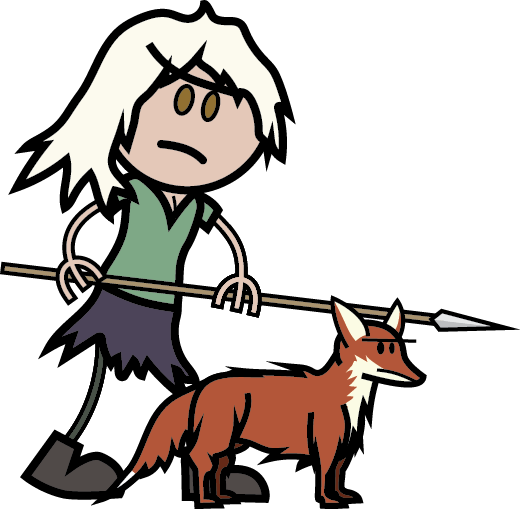
Nolin’s journal

Moonday, Erastus 7th

When I stepped into that room I knew that something was not right.

The battle with the Scribbler and his hounds and demons left me somewhat unnerved. It’s one of the few times that the party was not able to take the advantage, and we fought on the defensive at the mercy of his spells. Though he was no tactical genius, he was resourceful and he was prepared and it was enough to keep us off balance. Most importantly, it was enough to keep him alive. Once again one of our foes was able to vanish into thin air just when the tide was starting to turn.

My frustration with this encounter is why I chose, uncharacteristically, to take up the rear guard as we advanced through the fog. I don’t know why I did not trust my judgement, I just know that I did not. As it turned out this may have been the wisest decision I have made.

Sabin, Takkad, Rigel, and Rararallo all entered the hallway and that is when the confusion began. I still do not know the precise sequence of events, but within seconds spells were fired off and a wall of stone created to block our passage. Before I could move up to see what had happened, Rigel tore through the room and into the fog, running for her life. Running from us! And then Rararallo appeared, showing the same terror, the same wild look of someone who was consumed by paranoia and fear.

It was Kane that figured out that an enchantment was responsible, one that convinced those who entered that the evil Lamashtu had corrupted their friends. It was a subtle, clever suggestion. I am told that one so enchanted cannot be made to act against his or her nature, but twisting our own perceptions of reality would sidestep that limitation. Very clever, and very effective.

But not foolproof. Takkad, fearing the evil that he believed had taken over his friends, did what he would logically do in any such situation: he cast a spell of protection, and a side effect of this spell was to break the enchantment that was influencing him. Through the thin stone wall, which he had created for his own safety, we heard him exclaim a few choice words as the realization of what had happened came over him. Kane took my sword, for I did not trust myself to enter that hallway, and broke down the wall so that we could be reunited.

Takkad’s spell would eventually free Rigel and Sabin, at least temporarily, and so we retreated to the temple in Sandpoint to regroup and permanently dispel the charms that had afflicted us. Rararallo, however, was so shaken by these events that he has lost his nerve for adventuring. It is a shame, for in the short time that we have known him he has been a valuable companion, but I understand his decision. This is a very dangerous thing we are doing. His reaction is, I think, normal (which, disturbingly, suggests that ours is not).

Toilday, Erastus 8th

The Scribbler is dead. As I write this, my companions are searching the room at the end of the hallway and trying to make sense of the magical items and protections that are in place. Every now and then, one or two look my way give me “that look”. At least once I overheard talk about the Scribbler’s damaged falchion and what could be done to repair it. I know that some are upset about the destruction of a valuable magic item—an item that could have been sold for money—but I don’t care. I had long since lost patience with the Scribbler and with this place, and when I found myself face to face with him and feeling the business end of that weapon I deliberately smashed it to pieces. And it felt good.

If they want to try and fix it, fine. But I am not apologizing for my actions.

Nolin’s journal

Sunday, Erastus 6

We slew Longtooth in a brief but fierce battle. Our intent was to meet the terms of our agreement, but to do so absolutely to the letter. No one was entirely satisfied with having to forge a deal with the beast that was responsible for so much death and destruction in Sandpoint, but at that time we knew so little about Mokmurian, and the priority was to neutralize his allies by any means possible. Bribing him to stay out of the fight was a reasonable solution, distasteful as it was.

Once we emerged victorious, however, more and more of us were beginning to have second thoughts about the deal that had been struck. We were of course obligated to follow through, and there was little debate about this, but there were those, myself included, that were itching for a fight because we knew we could take him. And because it felt wrong to leave him where he sat, free to come for us at some point when the advantages were his. All we needed was an excuse to do it, one that did not require us to break our word.

In a sense, we gambled on his nature. All of us were certain that, given the chance, he would try to weasel more from us and failing that would turn to intimidation. This is where I drew the line: any attempt to balk on his part would make it fair game.

And balk he did. I of course was not expecting members of our party to bait him further, but I doubt the taunts did more than speed the advance towards the inevitable. Once he saw that we were victorious, and had brought him what was clearly a sizable share of the loot (and, I might add, a painstakingly accurate share: as I said, to the letter), he realized that he could have and should have asked for more. And that is when he began to argue, and that is when I knew argument would turn to threats. Some of us just ensured that happened quickly.

After we were unimpressed by his display, Sabin moved quickly and tapped Avia and I on the shoulders. With only a short warning to prepare us, we found ourselves teleported right in front of the dragon, quite literally in his face. And we swung away, and he went down in a blur of steel, barely registering what had happened.

It was quite possibly the most brilliant tactical move I have seen. It’s one we should remember for the future.

Soon, we head to the tower for a quick exploration. We wanted to spend more time here, but we learned via sending that there is trouble in Sandpoint—which came as no surprise, for there is always trouble in Sandpoint—and we must return quickly. The tower, however, is here and we have an opportunity to deal with it now, and that is what we are going to do.

Nolin’s journal entry


Our plan to release the dragons into the fortress in hopes that they would cover up our presence here was wildly successful, far more so than we had imagined. Cona informed us this morning that the two young wyrms were blamed for the escape of the dwarves, the deaths of the ogres and giants in the forge, and even the lammia. They were captured and killed with further served the purpose of leaving no witnesses to our presence in the caverns. Not only does no one know we are here, but there is no reason to even suspect it. We have bought ourselves more time and considerable freedom of movement.

But there is still Mokmurian. Alert to our presence or not, he is a dangerous foe and even more so surrounded by the beings with whom he has entered into service and they must be dealt with.

The first of these was an ancient hill giant which occupied a room on this very level. The battle with him was brutal and unexpectedly lengthy, for he could meld into the dirt to heal himself and we had no means (magic or otherwise) for affecting him in this state. The first time he did this we could do nothing but wait for him to return and we were interrupted by a pair of stone giants who had come wandering in for reasons unknown. We killed them and tied them up on posts that were in the room for this purpose to make it look like the hill giant had lost his temper and patience– something we were told was not unheard of– and thus set him up as responsible for their deaths. When he emerged from the dirt we were ready for him and took him down quickly, and we buried his remains save for his head which we took with us. In this manner we have used his reputation to our advantage, and once again we seem to have covered our tracks and bought ourselves more time.

The passage to the lower levels that house Mokmurian’s chambers and study are private, and no one dares enter there except at his order. With the hill giant dead there is not likely to be someone who will follow us there. As for the lower levels themselves, what we have seen so far is a single path through a series of chambers, some with traps, some occupied by allies. This does suggest that we will have to fight our way to Mokmurian, which I am sure is intentional, but it also means we will not have to watch our backs. Or so I hope.

Excerpt from Noliln’s journal (March entry)

…made our own camp just outside the encampment of the army amassing around the tower. For several days we sat and we watched, as more giants arrived to join the amassing army.

Observation confirmed that which we had begun to suspect: those who were entering into Mokmurian’s service appeared to be young, perhaps the equivalent of the age at which most human adolescents begin to rebel. It makes a great deal of sense. They are strong, healthy, passionate, and…easily swayed and influenced, something they seem to have in common with human recruits and soldiers. (It’s funny that I do not think of myself as young anymore even though I am not much older than I was when joined the guard back home. A lot has changed since then.)

The more we watch Jorgenfist, the more concerned I become that we are in over our heads. We are isolated, far from home, and surrounded by hundreds of stone giant soldiers which are formidable even untrained. Harpies patrol the skies. A red dragon, quite possibly the same one that we encountered in Sandpoint– we certainly hope it is, for having two dragons in between us and Mokmurian is a very unpleasant thought– appears to live in a cave on the northern edge of the valley. And at night we have seen three more dragon-like beasts that our casters believe to be wyverns hunting for prey.

A frontal assault is obviously out of the question. Having had enough of this, and growing more concerned that we may be discovered the longer we stay at the edge of the valley, we are moving out tomorrow to the ravines east of the tower. It’s probably too much to ask that there be some sort of back entrance that is unguarded, but plenty of these hills have caves and that suggests that there could be a network of caverns underneath us. If we are lucky, that will turn out to be the case, and if we are luckier still one might…

Nolin’s journal entry

Oathday, Sarenith 19

The giants’ attack on Sandpoint was as bizarre as it was ferocious. As we have made our way across the plains towards Wolf’s Ear we have seen the signs of raiding and scouting parties– campsites, pillaged towns, even a makeshift grave– and heard many stories of the same, but none seemed as well coordinated as what we faced. Perhaps they were just more prepared since Sandpoint is large enough a city to have resources to defend itself, and such an assault cannot be done ad-hoc, but what we have learned suggests that it simply has the misfortune of having been built in an important place, one with ties to the Thassilonian age that is somehow important to a larger scheme. This makes Sandpoint special, and deserving of a level of attention that is sure to make life difficult there for the forseeable future.

The raid, as it was, seems to have served two purposes. The first was exactly what it appeared to be on the surface: attack the town and drag away valuables and people. The second, however, was an attempt to retrieve a piece of the old lighthouse, for purposes that are not yet clear. Our wizards tell us that there are spells for communing with stones, and they suggest that there is something that the artifact…witnessed?…that is of great importance.

It was through a combination of luck, skill, and trickery that we managed to stop them short of their goal. While we have fought a number of foes, we have not been in a position where we have had to defend so many fronts, and so many people, at one time since the goblin assault many months ago. Of course, this time the attackers were larger, stronger, and though fewer, much deadlier. Faced with only bad options, we split our party up into smaller teams to deal with each threat as it came, and some of us very nearly lost our lives for it. And as bad as each encounter seemed, with each new one the situation grew more dire.

I’ll admit to being frightened at the sight of, not one, but two dragons flying over the city. One red that breathed fire, and one white that I am told spread ice and frost. I later learned that the second dragon was, in fact, a clever and well-timed (if not poorly communicated) illusion from Trask, created to keep the real dragon at bay. In that, I can say that Trask was largely successful, as the dragon did little more than torch a few buildings, and only claimed a few lives. Yes, the damage was severe, but what was intended to be a vehicle of panic and fear was instead kept somewhat to the edges of the city, wary and mistrustful of its surroundings.

The giants and dire animals, in contrast, were very real. Fortunately, we were able to use our numbers and our knowledge of the city to gain the upper hand and quickly turn the tide. I am told the last giant was felled just a few hundred yards from the city walls.

From his interrogation we learned of Mokmurian, a sort of upstart, insurgent leader with ambitions of uniting all giants under his reign. His plan appears to be to whip up a frenzy with promises of retaking the human lands, and these widespread raids appear to be early rewards for his followers. While I do speak of it a little flippantly, I have no doubts that he is very dangerous and very capable, and he certainly has the mettle to make it happen. We are told that he has a great deal of magical talent, and was audacious enough to claim a taboo site in his homelands as his fortress. These are the signs of one who knows they have power, and knows how to use it to wrestle control from others.

Though we have so far been successful, sometimes comically so, in defeating the bands of giants as we come across them, I do worry about what is on the road ahead. After entering Jorgenfist, we will no longer be dealing with isolated raiding parties of overconfident and under-prepared adversaries. We will be quite literally surrounded by giants. Though our resources are numerous, they are not unlimited and even these small skirmishes have left us drained. And then, there is still the matter of the dragon, a creature that breathes fire and flies high where it is difficult to fight. I fear that we are neither prepared to defend against it– we can all be burned by fire as easily as we burn others– or to take meaningful combat to it.

I will raise this concern with the party in the morning. We need to think, and to plan.

Nolin’s journal entry

Toilday, Pharast 4

Jakardos and Vale have gone to check on the dam while we stay at the fort to begin repairs and purge the place of any signs of the ogres’ occupation.

We are all exhausted from the fighting of the past two days. Despite our superior numbers and considerable talents, our foes were very nearly a match for us even when divided into small groups. Without the care, caution, and deception that we used to infiltrate the fort, we would have quickly found ourselves overwhelmed and forced to retreat, if not killed out right. Fortunately, our planning was sound and we were able to prevent the ogres from alerting one another so that we could dispatch them two or three at a time. How the rangers were ever able to keep these creatures in check was something of a mystery to me at first until it became clear that they never had to contend with more than a couple at a time. The ogres have never had this level of organization before. Individually they were tough but easily dispatched; organized under the guidance and influence of Lucretia, they were significantly more deadly.

The biggest coup was, of course, finding and destroying Lucretia on our very first night. I took a great deal of satisfaction in delivering the killing blow. For you, Olithar.

The plan to use her image to lure others in was crucial to our strategy of divide and conquer, and it worked so well on these simple creatures that we could probably had kept it up indefinitely (in the end, the opportunity to fireball the mess wagon was too good to pass up). Oh, how they were terrified of her. It never occurred to them that she might be destroyed, or that anyone would even dare to impersonate her.

Of course, this also served as a reminder that there are other sisters, and that Xanesha got away from us in Magnimar.


Fireday, Pharast 7

We are leaving now. As Tekkad had feared the dam has been breached. The river is rising quickly. Turtleback Ferry is in danger.

Nolin’s journal entry

Starday, Pharast 1

The surviving members of the Black Arrows created crude funeral pyres and Takkad said his words. Then we lit the flames and watched as the fire consumed it all: the obscene house burned to the ground, and the bodies of those slain were reduced to ashes. The smoke was, I am sure, visible for many miles but miraculously we did not attract any unwanted attention. And that was that.

What came next was less pleasant, and in many ways more distasteful. That Kaven would willingly and so eagerly turn on his own, knowing the fate that lay ahead, left me in a bitter mood. There are those in our party who believe he may have been influenced by magic, in the same way that Trask had been, but what I saw was just a young man with no moral compass and a desire to live a life where riches are given and not earned. There is an obsession that comes with the influence of magic, and it is something that I have seen enough of to recognize, but what is most telling is the change in a man’s character. In Kaven I saw no such thing. Magic was not necessary to get him to betray those who put their trust in him.

That Jakardos did not see the connection between Kaven’s convenient excuses and delays and the attack on the fort is not surprising. Who among us would look at one of our own? Who would suspect a traitor? He is fortunate that we were here, not just to aid in their rescue but to also provide an objective eye.

Soon we travel to Fort Rannick, which we hope to retake form the ogres that invaded many weeks ago. While I am sure it will be dangerous, possibly even deadly, I am actually looking forward to the simplicity of battle. We know what side we are on, and what side they are on, and that is all there is to it. This will be a welcome change.

Nolin’s journal entry

Fireday, 28 Calastril

I am taking a few moments to write while the surviving members of the Black Arrows decide what is to be done with the remains of their companions.

The sights in the farm house will be with me for some time, and were as gruesome and violent as any we have witnessed to date, including those at the Misgivings. We have all agreed that the house and the barn will be burned. This was one of those rare moments where we were all in consensus, and almost no words needed to be spoken to reach it.

An interesting twist to this tale: Jakardros, the apparent leader of the Order, was revealed to be Shelalu’s step-father, who apparently left her after her mother was killed (when? where? how?). There is more to this story– much more– but now is not the time to ask. It does, however, explain Shelalu’s personal interest in our mission, the cold stares once they learned of one another’s presence here, and Jakardros’ breakdown outside.

I must go; they are ready.

Nolin’s journal entry

Fireday, Calistril 21

We are finally putting some distance between ourselves and Magnimar and I am happier for it. As much as I enjoyed visiting with family and friends, there was always this constant reminder of why I had left and I suppose I’ve also become accustomed to our travels, and a lifestyle that ties us to nowhere in particular.

We’ve been joined by Takkad, who refers to himself as a healer. It is obvious to all that there is a religious aspect to this, but for whatever reason he does not talk a great deal about it. To each their own. My friends actually gave me a bit of a hard time for what they say was more an interrogation than conversation when we were finally introduced, but what did they expect? I am told he had been watching us for a few days– at which point I did recall seeing him in the inn on several occasions, I had just not put much thought into it at the time– and with our recent experience with shapeshifters and Xanesha I thought a bit of caution was in order, especially when a man claiming to be a healer just happens to come along at exactly the moment when we are in need, and still hurting from Olithar’s death.

Shalelu also found us again (how does she do that?) and asked to join us on our journey to Turtleback Ferry. At first I was as cautious with her as I was with Takkad. How many coincidences could we have in one week? But it did not take long to put that fear at ease, especially once the stories about Sedgewick came out. How she managed to stay in his company for so long remains a mystery with me, though obviously her patience did have its limits.

I assume her motivations for joining lie in her kinship with the rangers up north. I know she was not “hired” by the mayor as we were. I always suspected our rather large “gift” was something of an unspoken retainer, and now I know. I am not offended by this, it’s just less direct than I prefer to be. This has earned me more a small amount of ribbing from my companions.

We cross the river in the morning, and then begin our travel through the forest. I asked Shalelu what to expect, as she has been this way before, and her reply was a unhelpful side comment about gnomes. It was the voice of someone with a great deal of patience; patience that had not quite reached its limit. I wonder what that says about Sedgewick.

Nolin’s journal entry

Wealday, Abadius 15

Olithar’s death still hangs over us. Over me.

I am not naive. This work that we do is dangerous and not without significant risk, and Olithar like the rest of us knew those risks and faced them willingly and without hesitation. In the past months we have seen many terrible sights, witnessed violence on a scale unheard of in modern times, and confronted an ugliness that would chill even the most hardened man. Though we never spoke of it directly, we were all aware of how close each of us has come, some of us over and over again, to giving our life for this cause, and that it was but a matter of time before misfortune caught up with us. And so it did.

Part of me understands Olithar’s wishes to not return, but part of me also wishes that it wasn’t so. Such is growing up, I suppose.

I am frustrated that Xanesha lives. We were close. We had her. But we lacked skill with ranged weapons, having relied too much on magic in the past to meet this need. As prepared as we were, the assault on the tower has revealed a critical gap in our capabilities, and it is one that must be filled.

One wonders how much higher a price we would have paid had we not taken the time to plan our rather unusual ascent up the clock tower. It is clear from Xanesha’s meager defenses that she had expected nothing more than a simple, direct assault from the interior stairs. By coming up the outside with magic to aid our ascent we were able to reach the scaffolding nearly unscathed, closing the distance so rapidly that they had no time to adjust to our tactics. The best they could muster were a few bricks that were left over from the feeble attempts to repair the structure, thrown at us as we climbed.

If our plan had a flaw, it was that it simply worked too well and allowed half of our party to reach the roof without adequate combat support. From what Rigel and Kane describe, however, that may not have mattered in the end, for Xanesha had a few tricks of her own and Olithar’s fate was sealed in the first few seconds of her appearance. The best we might have managed had we all been there would be to give her more targets to choose from, and that is a sobering thought.

Even unprepared and disadvantaged Xanesha proved a difficult and capable foe. Had we been forced to come up that scaffolding as she had intended we might be mourning more than just one of our friends. Our cleverness is cold comfort, however, as Olithar is dead while Xanesha lives. I am not one for revenge and settling scores, but…this situation does not sit well with me.

Joaqin says that feeling will pass. I hope so, because I cannot afford to have my judgement clouded.

The mayor has made us rich men (and women) and I have to admit that I am surprised, shocked even, at what he has done. Not just the money, or even giving us his word and then keeping it, but also the actions he has taken to protect his town, and the citizens whose names appeared on Xanesha’s list. This is not the Lord Mayor Blah Blah Horse’s Ass that I thought I knew, or maybe it’s that he’s far more complicated a man than I ever gave him credit for and that I only knew one facet of many. I don’t know. In the end, he is doing the right thing, and not just for himself.

I would never have guessed.